If Boulder home prices have ever made you wonder whether there is a smarter way to buy, house hacking may be worth a serious look. In a market where Zillow reported an average home value of $971,332 and an average rent of $2,421 as of May 31, 2026, many buyers are looking for ways to reduce monthly carrying costs while still building equity. The good news is that Boulder does offer real live-in investment paths, but the rules matter. This guide will walk you through the house hacking options that fit Boulder’s current regulations and help you spot the right property before you buy. Let’s dive in.
What house hacking means in Boulder
House hacking usually means you live in the home while creating income from part of it. In Boulder, that often looks like renting bedrooms to roommates, creating a long-term rental in an accessory dwelling unit, or using a basement or separate living area as a legal second unit.
The key is that your income plan needs to match the city’s rules. A property that looks flexible on paper may still need permits, licensing, inspections, or physical upgrades before you can count on rental income.
Why Boulder buyers consider house hacking
Boulder’s housing costs naturally push buyers to think creatively. When purchase prices are high, even modest rental income can make a difference in your monthly budget, especially if you want to buy sooner rather than wait for perfect affordability.
House hacking can also give you flexibility over time. You might start by living in the home with roommates, then later convert part of the property into a long-term rental unit that better fits your goals.
Roommate house hacks in Boulder
For many buyers, the simplest option is renting rooms in an owner-occupied home. Recent Colorado law prohibits local governments from limiting occupancy based on familial relationship, and Boulder says it will no longer enforce occupancy limits based on the number of unrelated people living in a unit.
That does not mean anything goes. Boulder still enforces health and safety occupancy standards through the International Property Maintenance Code, including minimum bedroom size and room area rules.
Boulder also says a rental license is not required when an owner-occupied dwelling rents to no more than two unrelated people. This makes the classic roommate setup one of the most straightforward house hacking strategies in the city.
When roommate income makes sense
A roommate strategy may be a good fit if you want the lowest-friction path to offset costs. It can work especially well in homes with a practical layout, such as separated bedrooms, more than one bathroom, or a lower level that gives everyone more privacy.
This path can also be helpful if you are not ready to take on construction or a permitting process right away. You can focus first on finding a home you enjoy living in, then add income in a relatively simple way.
ADUs as a Boulder house hack
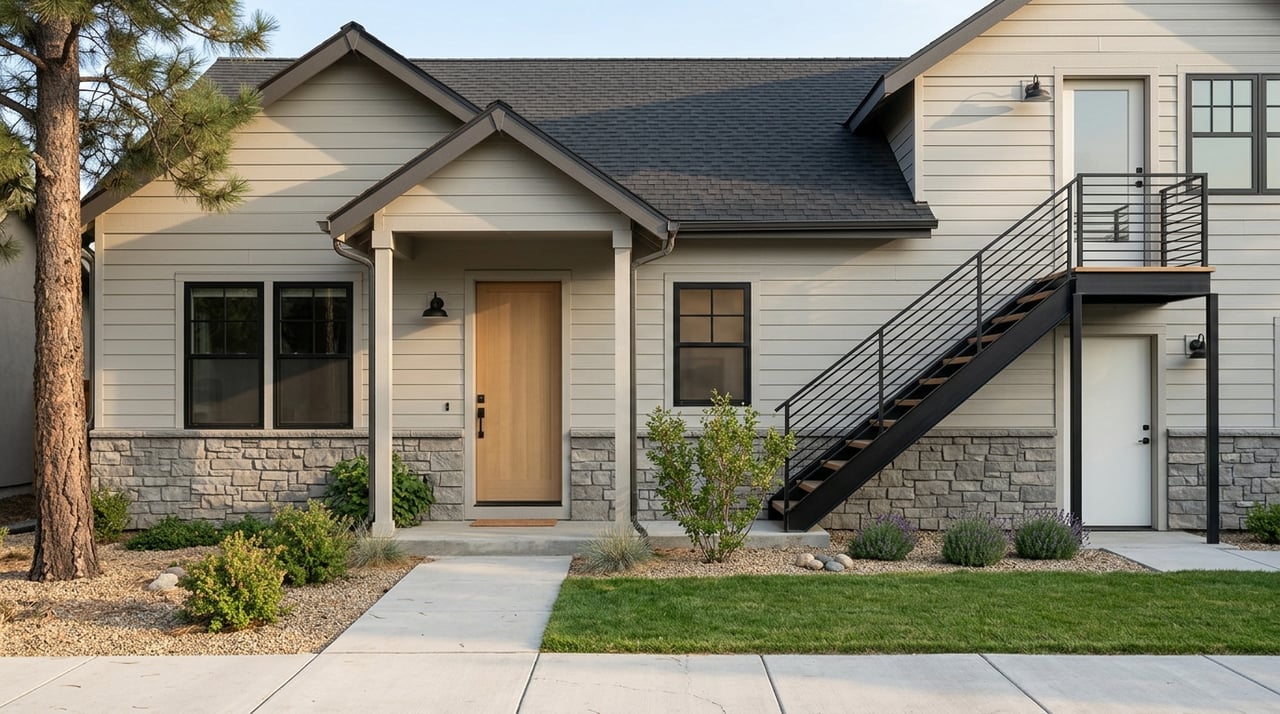
Accessory dwelling units, or ADUs, are one of Boulder’s most important live-in investment options. The city defines an ADU as a separate unit with its own kitchen, sleeping area, and bathroom, either attached to or detached from the main home.
Boulder now reviews ADUs through the standard building permit process, and as of March 8, 2025, owner occupancy is no longer required. That change creates more flexibility for buyers who want a property that can support long-term rental income now or later.
Long-term rental of either the ADU or the main home is allowed. However, the ADU cannot be sold separately from the principal home.
Attached ADUs
Attached ADUs can be a practical choice if the home already has a basement, studio, or secondary living area that can be converted. Boulder notes that attached ADUs need a wall or lockable door between the units, which helps create legal separation.
If the space was previously permitted for another use, such as general living space or an office, a change of use permit may still be required to document life-safety compliance and formally establish the unit. That step is important because a space that looks rentable is not always legally recognized as a dwelling unit.
Detached ADUs
Detached ADUs can create excellent separation between your living space and your rental space, but they are often more complex than they first appear. Boulder requires at least 6 feet of separation from other buildings, an in-property wet utility permit, and automatic sprinkler systems for detached ADUs.
Those requirements can affect both design and budget. Before you build expectations around detached-unit income, it helps to confirm lot layout, utility access, and construction feasibility early.
Basement and secondary-space conversions
Many Boulder buyers are drawn to homes with finished basements, garden levels, or bonus spaces that seem easy to rent. Sometimes they are. Sometimes they are not.
Boulder notes that some older second units were originally created as offices or extra living space and were later modified into separate sleeping and cooking areas without permits. If that happened, the owner must go through the building permit process to legalize the unit.
That is why due diligence matters so much. Before you count a basement or secondary area as income-producing space, you need to know whether it is legally established and whether it meets life-safety requirements.
Short-term rentals are not the easy play
If you are thinking about vacation-rental income, Boulder is not a loose short-term rental market. The city defines short-term rentals as stays of 29 days or less and requires the property to be the owner’s principal residence.
The license name must match the deed, city occupancy rules still apply, and an annual affidavit is required to keep the license active. For ADUs, short-term rental of either the ADU or the main house is generally prohibited unless both the ADU and short-term rental license were established before February 1, 2019.
For most buyers, the practical takeaway is simple: if you want house hacking income in Boulder, focus on long-term rental or roommate income first.
What makes a property house-hack ready
Not every home with extra space is a strong candidate. In Boulder, a good house-hack property usually combines usable layout, legal potential, and realistic compliance costs.
Here are some of the features worth looking for:
- A basement or secondary living area with egress
- A separate entrance or easy path to create one
- Space for a lockable separation between units
- Bedroom sizes and room areas that can support health and safety standards
- A lot and building layout that may support an attached or detached ADU
- Property history that suggests permitted work rather than informal conversions
Just as important, Boulder says ADUs are allowed in many zoning districts, but not all. Older planned development or site-review approvals may also require a minor modification before an ADU permit can be issued.
The city also warns that deed restrictions and some HOA covenants may prohibit ADU construction or use. Because those are contractual restrictions, the city cannot override them.
Due diligence before you buy
If you are buying with a house hacking strategy in mind, your evaluation needs to go beyond bedrooms and square footage. A polished marketing presentation does not tell you whether a second unit is legal, licensable, or inspection-ready.
Start with the questions that directly affect your income plan.
Questions to ask early
- Is the rental space already legally established as a dwelling unit?
- If not, what permits or a change of use process may be required?
- Will the property need a long-term rental license?
- Has SmartRegs compliance already been completed, and if so, will it carry over?
- Are there life-safety issues involving egress, smoke detectors, carbon monoxide detectors, heating, electrical, plumbing, or fire safety?
- Is the property in a zoning district that allows the intended setup?
- Are there HOA rules or deed restrictions that block the plan?
Boulder also says it does not offer pre-review for building permit applications. That means buyers should plan around formal review timelines rather than relying on informal assumptions.
Licensing and inspections to understand
If your setup goes beyond the owner-occupied exemption for renting to no more than two unrelated people, Boulder requires a valid rental license before occupancy for long-term rentals. The city also requires a rental inspection and SmartRegs compliance.
There is one useful detail for buyers to know. Boulder says a new rental license is required when ownership changes, while SmartRegs compliance itself can carry over to the new owner.
That distinction matters when you compare properties. One home may already be much closer to income-ready status than another, even if both seem similar at first glance.
The smartest way to frame house hacking
In Boulder, house hacking works best when you think of it as a flexible live-in investment strategy, not a shortcut. The strongest properties let you buy a home you can enjoy now while creating a legal rental path for the future.
That could mean starting with one or two roommates. It could mean buying a home with an existing legal ADU. It could also mean purchasing a property with the right layout and zoning to add a rental unit over time.
The common thread is simple: your plan should be based on what is legally supportable, not just what appears possible.
How to buy with more confidence
In a market like Boulder, the right house hack is often less about chasing maximum income and more about choosing a property with fewer regulatory surprises. A home with a clear path to legal rental use can save you time, money, and frustration after closing.
That is where local, detail-oriented guidance matters. If you want help comparing properties, spotting house-hack potential, and asking smarter due-diligence questions before you buy, connect with Rachel Weinberg to schedule a free consultation.
FAQs
What is house hacking in Boulder real estate?
- House hacking in Boulder usually means living in the home while generating income from roommates, an ADU, or another legally established rental space.
Do you need a rental license for roommates in Boulder?
- Boulder says a rental license is not required when an owner-occupied dwelling rents to no more than two unrelated people, though health and safety occupancy standards still apply.
Can you use an ADU for long-term rental income in Boulder?
- Yes. Boulder allows long-term rental of either the ADU or the principal home, and owner occupancy is no longer required for ADUs as of March 8, 2025.
Can you short-term rent an ADU in Boulder?
- Generally no. Boulder says short-term rental of either the ADU or the main house is generally prohibited when an ADU is present, unless the ADU and short-term rental license were established before February 1, 2019.
What should you check before buying a Boulder house hack property?
- You should confirm whether the space is legally established, whether permits or a change of use process are needed, whether licensing and SmartRegs apply, and whether zoning, deed restrictions, or HOA rules affect your plan.
Are detached ADUs easy to build in Boulder?
- Not always. Detached ADUs can involve added complexity because Boulder requires building separation, wet utility permitting, and automatic sprinkler systems.