If your workday starts with a laptop and ends with a trail walk, Boulder likely already feels like a strong fit. Remote work is not just possible here. It is supported by the city’s mix of outdoor access, flexible workspaces, and neighborhoods that offer very different day-to-day rhythms. If you are searching for a home that helps you work well and live well, this guide will show you what to prioritize and how to think about Boulder’s main options. Let’s dive in.
Why Boulder works for remote life
Boulder offers a rare mix of professional energy and lifestyle support. The city highlights more than 45,000 acres of preserved open space, over 150 miles of trails, and more than 300 days of sunshine each year. It also notes a local economy with more than 7,000 businesses and a strong innovation and startup presence.
That matters if you work from home full time or split time between home and meetings. Boulder was ranked No. 3 in Coworking Cafe’s Top Cities for Remote Workers, and it has the seventh-highest number of coworking spaces per capita among U.S. cities. For hybrid schedules, the city also notes that Boulder is about a 35-minute drive from downtown Denver and around 45 minutes from Denver International Airport.
In practical terms, Boulder gives you more than a house with an extra room. It gives you choices for how you want your week to flow, whether that means quiet time at home, a coffee shop change of scenery, or a quick trip to a meeting outside the city.
What to look for in a remote-friendly home
Flexible space matters most
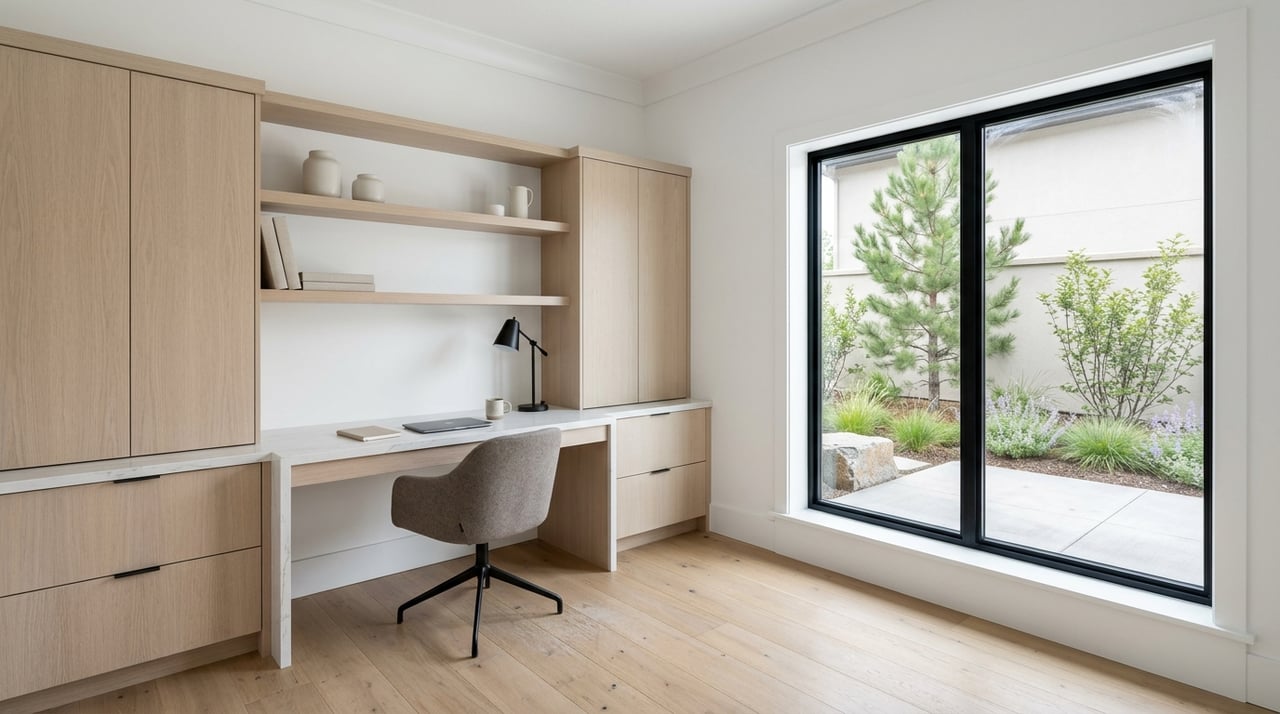
A dedicated office is helpful, but it is not the only way to make a home work for remote life. The research shows many buyers now place a work area within another room, such as a bedroom, kitchen, or living room. That means a smaller home can still function well if the layout gives you a clear work zone.
When you tour homes, pay close attention to spaces that can do double duty. A loft, a secondary bedroom, a dining nook, or even a wide landing can become a productive office if it has decent separation and enough room for daily use.
Natural light can improve your day
Boulder’s 300-plus days of sunshine are a real advantage for people who spend long stretches indoors. Homes with larger windows, open sightlines, and strong exposure often feel more comfortable during the workday. Tall windows and a sense of openness also continue to appeal to buyers.
If you are comparing similar homes, the brighter one may feel better over time. Light affects how a workspace looks, how it photographs during video calls, and how energized you feel by late afternoon.
Noise control deserves extra attention
Not every remote worker needs total silence, but most need some level of acoustic separation. This becomes especially important in more active parts of Boulder, including downtown and University Hill, where pedestrian activity, restaurants, and entertainment can shape the daily sound level.
A room with a door, better window insulation, or an office that faces an interior courtyard or quieter side of the property can make a big difference. If you take frequent calls, these details may matter more than an extra hundred square feet.
Outdoor space adds real value
Remote work is easier to sustain when you can step outside between meetings. Buyer preferences continue to favor patios, porches, decks, and similar transition spaces. In Boulder, that kind of outdoor break fits naturally with the local lifestyle.
Even a small yard or compact deck can improve your routine. It gives you a quick reset during the day and makes a home feel more balanced when work and life happen under the same roof.
Boulder areas to compare
One of the biggest decisions is not just the home itself. It is the setting around it. In Boulder, the tradeoff often comes down to activity and walkability versus quiet and easy outdoor breaks.
Downtown Boulder and Pearl Street
Downtown Boulder is centered around shopping, restaurants, services, entertainment, and events, with Pearl Street Mall serving as a four-block outdoor pedestrian destination. If you want to walk to coffee, meet clients nearby, or break up the day with errands on foot, this area stands out.
The tradeoff is activity. If you love energy and convenience, downtown can be a strong match. If your work requires long stretches of quiet, you may want to focus on homes with better sound separation or interior-facing workspaces.
University Hill
The city describes University Hill as a dynamic neighborhood with an eclectic mix of restaurants, shops, and entertainment venues. For some buyers, that means built-in convenience and a lively feel that keeps the day interesting.
For remote work, the question is whether you value access and energy more than stillness. If you do, The Hill can be appealing. If you need a calm home base for calls and focused work, layout and insulation become especially important here.
Boulder Junction
Boulder Junction was designed as a mixed-use, pedestrian-oriented place where people live, work, shop, and connect to local and regional transit. It is one of the clearest examples in Boulder of a neighborhood built around modern, flexible routines.
This area makes sense if you want a car-light lifestyle and easy movement between home, transit, and work-friendly destinations. Transportation benefits in the district can include EcoPasses, BCycle, and Colorado CarShare memberships for residents and employees in qualifying settings.
East Boulder
East Boulder is evolving toward a local business hub with housing, mobility improvements, and mixed-use neighborhoods. The East Boulder Subcommunity Plan also points to future high-frequency bus rapid transit at the 55th and Arapahoe station area.
If you like the idea of living near an area that supports a work-near-home routine, East Boulder is worth watching closely. It offers a different feel from downtown, with practical long-term potential tied to growth and transportation improvements.
North Boulder
North Boulder, often called NoBo, offers a more residential and amenity-supported rhythm. The area includes practical destinations like the North Boulder Library, North Boulder Recreation Center, and North Boulder Park. The 2024 amendment to the subcommunity plan also adds a North Boulder Art District and Creative Campus area.
For many remote workers, NoBo hits a comfortable middle ground. You get useful daily amenities and a community-oriented setting without relying on the higher-activity pace of central districts.
South Boulder and Table Mesa
South Boulder offers strong trail access, including the NCAR-Table Mesa Trail and South Mesa trailhead. The city also notes that the Table Mesa Shopping Center sits centrally within the subcommunity.
This part of Boulder can work well if your ideal schedule includes a quick outdoor break, nearby errands, and a foothills-adjacent feel. If trail access is part of how you recharge during the day, South Boulder deserves a close look.
Backup workspaces make home life easier
Even the best home office will not cover every situation. Sometimes you need a change of scenery, a quieter room, or a place to meet someone. Boulder gives you plenty of backup options.
The Boulder Colorado USA remote work guide highlights work-friendly coffee shops such as Trident Booksellers & Cafe downtown, Alpine Modern on 29th Street, OZO locations including East Pearl and East Boulder, Boxcar, Rosetta Hall, and Baby Goat. It also lists coworking options including WeWork, Founder Central, Park Coworking, Kiln, and Industrious at Pearl Street.
These spaces often offer features remote workers actually use, like Wi-Fi, outlets, quiet work areas, phone booths, conference rooms, and private offices. That gives you flexibility if your home setup is compact or if you simply work better with a little variety.
Boulder Public Library is another practical fallback. The library offers free Wi-Fi at all locations, and meeting or study rooms can be reserved at the Main, George Reynolds, Meadows, NoBo, and Gunbarrel branches. If you need a reliable place to focus for a few hours, that can be a real advantage.
Mobility matters more than you think
A remote-friendly home is not only about what is inside your walls. It is also about how easily you can leave the house without turning every errand or break into a full production.
Boulder’s community transit network is operated mostly by RTD and Via. The city also notes micromobility options such as BCycle and Lime, and several OSMP trailheads are accessible by bus with bike racks at many access points.
For hybrid workers or anyone who likes to break up the day, this matters. You can go from home to a coffee shop, library, meeting, or trailhead with less dependence on a car, which can make your routine feel lighter and more flexible.
How to choose the right fit
When you are shopping for a remote work-friendly home in Boulder, start with your daily habits instead of a generic wish list. Ask yourself where you do your best work, how much quiet you need, and how often you want to leave the house during the day.
A strong match may look different for every buyer. For one person, it is a bright condo near Pearl Street with walkable coffee options. For another, it is a home in South Boulder with a flexible office and quick trail access. The key is finding a property and location that support the way you actually live and work.
If you are planning a move, it helps to work with someone who understands how Boulder’s submarkets feel in real life, not just how they look on a map. Rachel Weinberg can help you compare neighborhoods, evaluate layouts, and find a home that supports both your workday and your lifestyle.
FAQs
What makes a home remote work-friendly in Boulder?
- A Boulder home often works best for remote life when it offers flexible space for an office, strong natural light, some acoustic separation, and outdoor space such as a patio, deck, porch, or yard.
Do you need a dedicated home office in Boulder?
- No. Many buyers use a secondary bedroom or another area of the home as a work zone, so a well-planned layout can matter more than having a room labeled as an office.
Which Boulder areas are best for walkable remote work routines?
- Downtown Boulder, Pearl Street, and Boulder Junction are strong options if you want easy access to coffee shops, meetings, services, and pedestrian-oriented daily routines.
Which Boulder areas may feel quieter for working from home?
- North Boulder and South Boulder often appeal to buyers who want a more residential feel, practical amenities, and easier access to outdoor breaks.
Are there places to work outside the home in Boulder?
- Yes. Boulder has a range of coffee shops, coworking spaces, and library locations with free Wi-Fi and reservable meeting or study rooms, which can be helpful when you need a backup workspace.
Is Boulder a good fit for hybrid workers too?
- Yes. Boulder offers local transit, micromobility options, and a location about 35 minutes from downtown Denver and about 45 minutes from Denver International Airport, which can support a hybrid schedule.